

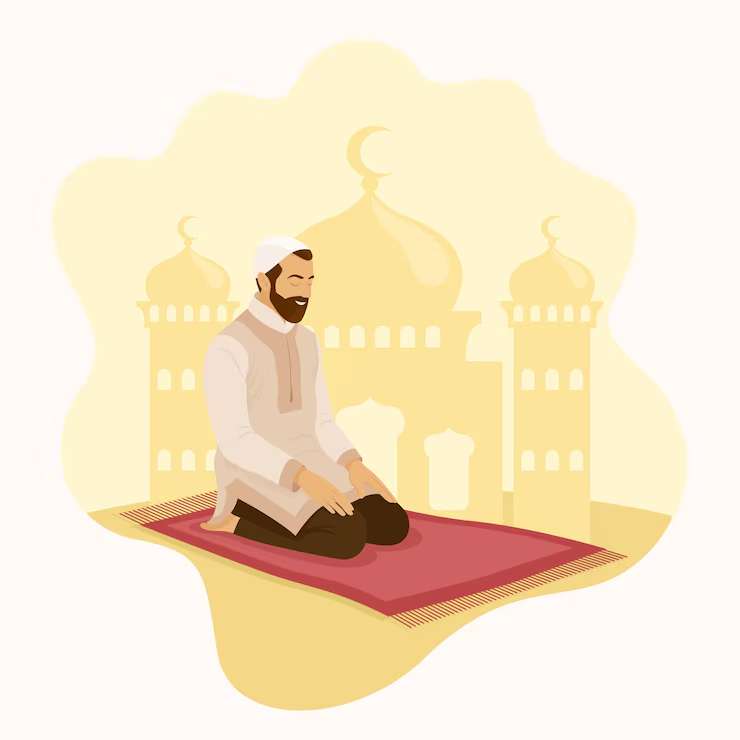
Salah (also called Namaz in some cultures) is the daily prayer performed by Muslims. It is one of the five pillars of Islam and a very important practice in the life of every Muslim. The five pillars are the basic duties that every Muslim follows, and they are:
- Shahada: Belief that there is no God but Allah, and Muhammad (PBUH) is His messenger.
- Salah: The daily prayers.
- Zakat: Giving to charity.
- Sawm: Fasting during the month of Ramadan.
- Hajj: The pilgrimage to Mecca.
Salah helps Muslims remember Allah and connect with Him. Muslims pray five times every day, and each prayer has a specific time and number of rakats (units of prayer).
The Five Daily Prayers
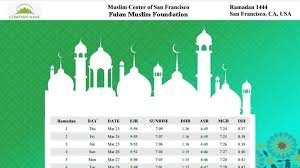
Muslims pray five times each day. These prayers are performed at specific times based on the movement of the sun. Here’s a look at the five daily prayers:
1. Fajr (Dawn Prayer)
- Time: Performed early in the morning before sunrise.
- Rakats: 2 rakats (mandatory).
- Significance: Fajr helps Muslims begin their day with worship and remembrance of Allah.
2. Dhuhr (Midday Prayer)
- Time: Performed when the sun has passed its highest point, around noon.
- Rakats: 4 rakats (mandatory).
- Significance: Dhuhr prayer gives Muslims a break from their daily tasks and allows them to refocus on Allah.
3. Asr (Afternoon Prayer)
- Time: Performed in the late afternoon, before sunset.
- Rakats: 4 rakats (mandatory).
- Significance: This prayer helps Muslims take a moment for reflection before the end of the day.
4. Maghrib (Evening Prayer)
- Time: Performed just after sunset.
- Rakats: 3 rakats (mandatory).
- Significance: Maghrib prayer is a peaceful way to end the day and connect with Allah.
5. Isha (Night Prayer)
- Time: Performed after sunset and before midnight.
- Rakats: 4 rakats (mandatory).
- Significance: Isha is a time to calm the mind and reflect on the day before rest.
Other Important Prayers
Besides the five daily prayers, there are other important prayers in Islam, including:
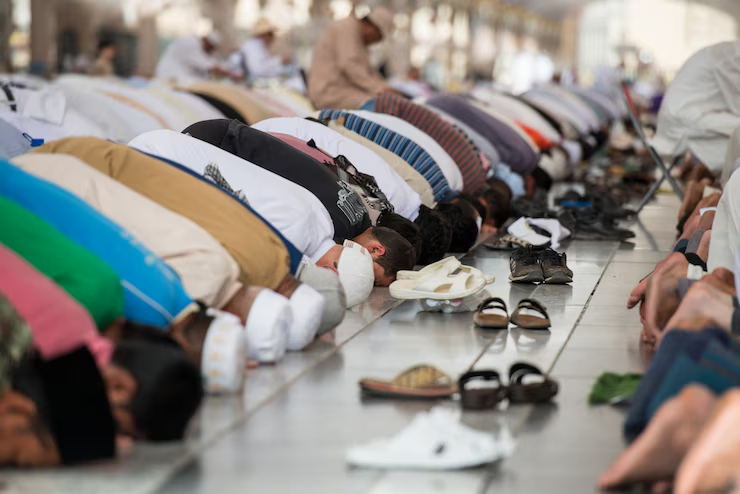
- Jumuah (Friday Prayer): A special prayer performed on Fridays during the Dhuhr time, replacing the normal Dhuhr prayer. It includes a sermon and prayer in congregation.
- Tahajjud (Night Prayer): A voluntary prayer performed at night, before Fajr. It’s not mandatory but carries many rewards.
- Tarawih (Ramadan Prayers): Additional prayers offered after Isha during the month of Ramadan.
- Eid Prayers: Special prayers performed on Eid al-Fitr (after Ramadan) and Eid al-Adha (during Hajj).
The Adhan: The Call to Prayer
The Adhan is the call to prayer, announced to remind Muslims of their prayer times. It is usually recited by the muezzin, the person who calls the prayer from the mosque (masjid). The Adhan is called out five times a day before each prayer.
The Adhan includes these words:
- Allahu Akbar (God is Great)
- Ashhadu an la ilaha illallah (I bear witness that there is no God except Allah)
- Ashhadu anna Muhammadar Rasool Allah (I bear witness that Muhammad is the messenger of Allah)
- Hayya’ ala-s-Salah (Hurry to prayer)
- Hayya’ ala-l-Falah (Hurry to success)
- Assalatu khairum-minan-naum (Prayer is better than sleep – only for Fajr)
- Allahu Akbar (God is Great)
- La ilaha illallah (There is no God except Allah)
The Adhan is a reminder for Muslims to stop what they are doing and offer their prayers to Allah.
Wudu (Ablution) Before Salah
Before praying, Muslims must perform Wudu, a ritual washing to purify themselves. Wudu involves washing the hands, mouth, nose, face, arms, and feet. It is important for keeping both the body and mind pure before praying.
Rakats in Salah
Each prayer is made up of units called rakats. A rakat consists of specific actions and recitations, including standing, bowing, prostrating, and sitting. Every prayer has a set number of rakats, as mentioned below:
- Fajr: 2 rakats
- Dhuhr: 4 rakats
- Asr: 4 rakats
- Maghrib: 3 rakats
- Isha: 4 rakats
These movements and recitations help Muslims stay focused during their prayer and remind them of Allah’s greatness.
Benefits of Prayer Positions in Salah
Salah includes different positions that have both physical and spiritual benefits:
Qiyam (Standing)
- Benefit: Helps improve posture and circulation in the lower body.
Ruku (Bowing)
- Benefit: Improves flexibility and helps relieve back pain by stretching the spine and joints.
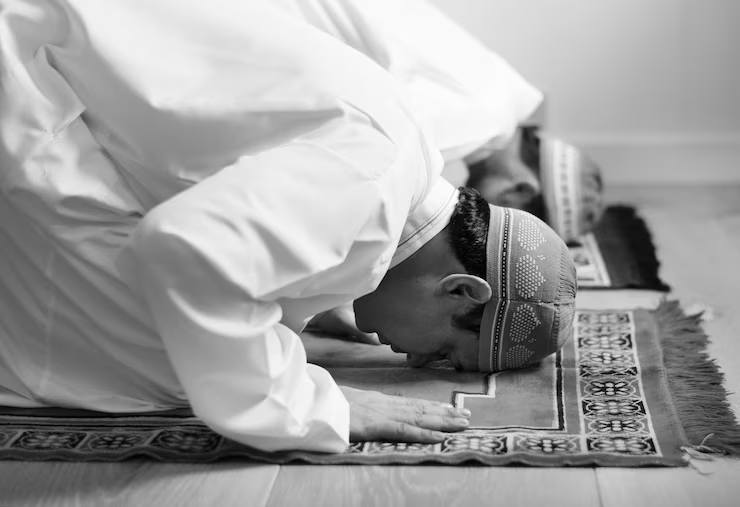
Sajdah (Prostration)
- Benefit: Increases blood flow to the brain and helps improve focus. It’s a moment of complete submission to Allah.
Tashahhud (Sitting)
- Benefit: This position strengthens the legs and improves digestion. It’s also a time for reflection and prayer.
Conclusion: Why Salah Matters in Islam
Salah is one of the most important acts of worship in Islam. It connects Muslims to Allah, keeps them disciplined, and offers a time for reflection throughout the day. By performing the prayers at their designated times and with full devotion, Muslims strengthen their faith and seek Allah’s guidance.
Whether it’s the Adhan calling them to prayer, the Wudu purifying them, or the rakats guiding their movements, Salah provides a framework for Muslims to remember Allah and live righteous lives. Each position and movement in Salah serves not only to purify the body but also to elevate the soul.
https://khaleejtimes.ca/




Leave a Reply